Preventing Suicides Among College Students

Preventing Suicides Among College Students

Preventing Suicides Among College Students

There are few moments in life more thrilling and transitional, then when a young person leaves for college.  It is a monumental event, and the on-set of adulthood, with its “real life” experiences, challenges, the fine nuisances that being self-reliant, responsible, organized, sociable, studious, and focused, bring at this time of life, if you are a perfect person.  The human condition, however, needs time to adjust to the vagaries of college life.  Studying, without parental encouragement, choosing a major field of study that will morph into a successful career path in the future, getting good grades, adjusting to sharing personal spaces, and building relationships with peers and professors; all of these new skills, and expectations, can take a toll on any matriculating student.

The sudden loss of the comfortable, support system that home, family, familiar spaces, friends and unconditional love brings, adds to the stress of seeking significant levels of higher education.  If a pre-existing mental health condition has gone undiagnosed, such as anxiety or depression, the additional stressors found in college life, can manifest into significant symptoms, and emotional difficulties, which make academic life extremely difficult.

Mental Health is Now a Critical Issue for College Students

Dr. Kelly Posner, assistant professor of clinical Psychiatry at Columbia University, has stated that suicide is the second leading cause of death among college students.  It is an extremely complex public health issue, often having multiple causes.

Dr. Posner’s work has revealed that the transition to the college atmosphere, and new responsibilities of self-management, coupled with a lack of adequate sleep, and improper diet, often bring about the on-set of biologically-based illnesses of the brain, like depression and bipolarity, that had not been previously experienced.  According to the JED Foundation, a non-profit resource center for young adult emotional health, 1 in 1000 students who extensively contemplate ending their life, do commit suicide.


What Stressors Trigger Depression and Suicidal Ideation?

The intense challenges of the college years, in this generation of perfectionism, coupled with mental health issues, substance abuse, and being far from a strong support system, can lead to feelings of an intense pressure to perform well academically.  This rising pressure culminates into severe anxiety.  Intense internal conflicts also play a part in seeking emotional release and relief.  New and unique social relationship issues add to the overload of stressors on an already vulnerable student mindset.  Researchers noted that two-thirds of transgender student’s self-harm, while one-third attempt suicide during the college years.  25% of bisexual students attempt suicide while involved in scholastic pursuits, and intense personal relationships.  Constant financial concerns, GPA expectations, either self-driven, or from family members, and alcohol or drug consumption, also add to a student’s inability, and capacity to cope with their environs in positive ways.  Often, students are new to the unrestricted drug and alcohol usage scenario.   According to the American Association of Suicidology; substance abuse adds to the destabilization of the user, and triggers the paranoia of any mental health issues, such as personality disorders, anger management, depression, and suicidal ideation.


Sadly, a great number of students suffering from mental health problems, do not seek professional help. Often, loved ones in a student’s life, lack the comprehensive knowledge of what “signs” to look for, when determining the diminishing mental health of their cherished child, who is away at school, not communicating well, and suffering in silence.

Combating Increasing Suicidal Ideation with On Campus Counseling

The escalating rise in the numbers of collegians who are coping, by contemplating suicidal ideation, whether pre-occupational, or specific and continuous, leading to fulfillment, are staggering.  Some research estimates that 34% of all students in the United States, have these thoughts at some point during their residence at school. The good news is that more than ever, students are seeking help from the college counseling services.  However, due to a serious lack of resources, and the fact that most campuses do not, or cannot, offer low cost, long-term health care, or have in place, access for students to off-campus resources for mental health issues; there needs to be an increased effort to allocate funding for such programs, based on the dire need, and the fact that the death is desired, rather than an educated life.

Little sensitivity exists for students who are struggling with depression and anxiety, from peers who see them as uncompetitive, and a burden to their peers.  This kind of bias feeds the stigma that keeps suffering students from seeking the help they desperately need.

Colleges Must Make Health Care Management a “Norm”

Shelly Leaphart-Williams, a board member for the American Foundation for Suicide Prevention, has suggested strongly that colleges must step up to change the attitudes regarding mental health issues, since the commonality of this problem reaches out to encompass everyone now. 61% of the students enrolled in college today, have reported serious issues with anxiety, hopelessness, and depression, in the last 12 months, as is stated by the National College Health Assessment group’s survey results.  To be fair, college counseling services have increased by 30% over the last five years, but offering three, free, counseling sessions is just not enough support, and professional help must be found off-campus, by the student.  Often, students are not made aware of the support that is available on campus. This information needs to be disseminated, prominently, as an essential part of the matriculation process, just like choosing a major, or finding a special, accelerated class to attend.

What Parents, Guardians and Friends Must Do

Parents need to pay attention to a loved one who is attending school, by calling, visiting, e-mailing, Skyping, texting and sending care packages, with messages of support.  Letting the student know that they have earned their place in college, by being accepted, and that they can share any and every doubt, and concern, with their family, or seek counseling, to get the coping skills needed for this challenging experience.  If grades slip, and communication is irregular, or a “gut feeling” indicates that something is not right, do the footwork to be there for this collegian.  Often, suicidal ideation passes, or only occurs occasionally, until a return to normal takes place in their campus life. Being prepared for emotional peaks and valleys, which your college kid experiences, just like during  their adolescenc; may make an enormous difference in the way they bounce back, and gain the coping skills which will assist them for the future. Remember, too, if they need professional help, it is a wise and courageous choice. Everyone has issues, and any stigma associated with seeking answers for overwhelming feelings, represents ignorance, and will, in time, no longer be tolerated.
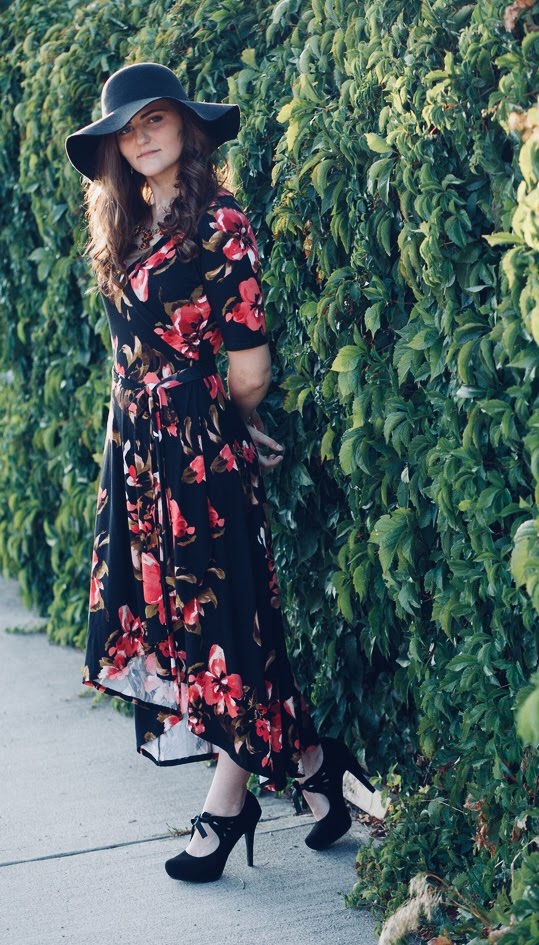

Real-Life Stories: Madison Bird

Real-Life Stories: Madison Bird

Welcome to the start of our Monthly Real-life stories.  Each month we will feature a new story with someone who has real-life experience themselves or with loved-ones who suffer from depression, cyberbullying, substance abuse or suicide.  Social Media makes the world look amazing which in-turn makes us feel bad when our lives do not measure up.  It is important to understand the difference between the social media world and the real word.  We hope through these experiences, you will see:

  1. You are not alone, many people suffer.
  2. It is ok to not be ok, there is help.
  3. You can overcome it, talk to others for support.

In our first real-life story, we talked with Madison, a young artist. You can find a sample of her art on a t-shirt in our store here.

Fipple: Please describe yourself in a few short sentences?

Madison: I am currently studying Graphic Design at Brigham Young University-Hawaii.  I hope to travel to any place with a sense of adventure, because I love being in new places and meeting new cultures. Growing up as a member of the Church of Jesus Christ of Latter-Day Saints was never a challenge in my life, it was the years spent moving across the United States. In fact, being a member of the Church was a reason to hold my head high and keep strong no matter where I moved. I have moved 28 times in 8 different states, including: Montana, Florida, Oklahoma, Hawaii, Utah, Idaho, Ohio, and California.  

Fipple: Can you describe your Art?

Madison: I love using very simple designs and bringing them to life with color. I love the idea of simplistic beauty, because it makes it feel like anything can be lovely if you add a little color and personality; parallel to real life. I have spent many hours with my pencils, water colors, acrylics, oils, etc…trying to introduce black and white to a world of color.

Fipple: What inspired you to be an Artist?

Madison: I was inspired by the art of others. Not the ancient artists of old, but the modern influencers of our society today. I wanted to be one of those people who made something that inspired others, like I myself was inspired. I wanted to create art to express myself and my emotions so that hopefully someone would see it and feel what I felt. Becoming an artist wasn’t easy, it still isn’t, because everyone has their own view of what they believe art is. I wish I knew when I was younger that it didn’t matter if I painted the next Mona Lisa or not, but that if I was happy with my piece then that is what mattered. I am inspired by the strength and courage I see in others every day and hope to reflect that through my art.

Fipple: You mention your inspiration comes from the art of others. Are there any specific works of art that made the biggest impact on you and why?

Madison: There are a few pieces that I really like and that I can relate to. But there is one, I’m not sure who the artist is, but it is a drawing of someone under an umbrella and the rain is washing the color off the umbrella. At the bottom it says, “please don’t wash away my colors”. The reason I love this so much is because in real life it can feel like the storm is raging too hard, and you can’t fight against it. So, it washed every part of you away. It is actually quite sad, but I like it because it reminds me to keep my colors close to me. Safe.

Fipple: Can you share a little bit about the emotional experience you go through when one of your pieces is shown for the first time?

Madison: It is such an anxious time, because you aren’t sure how others are going to like your art. You give your all into something with hope that it will be loved, when often it is quite opposite. I am also a writer, singer, and actress (as hobbies) and all of these things share one thing in common. It is that you are putting your all into it with hopes of high praise. Rejection is a scary thing, it hurts a lot and that will never change. But it shouldn’t be something that is feared, rejection is an opportunity to grow and fine tune your strengths. The first time I ever performed infront of a crowd was when I was 8 years old, I sang “The Climb” by Miley Cyrus for my entire town and it was so exhilarating because of how scary it was. When I was 16, I sang for about 1,500 people, and the amount of anxiety I had was so over-whelming. But the moment I started singing Hallelujah, all of that doubt washed away because I was doing something I loved. Overcoming your fears is not an easy feat, but the feeling you get when it’s over is incredible.

Fipple: Can you share your experience (directly or in-directly) with Cyber Bullying, Suicide, substance abuse, or School violence?

Madison: The word suicide in today’s world is almost taboo, and I wish it weren’t. Because I know how it feels too to think everything is hopeless. Like there isn’t a single soul who could help you feel better. It is also very easy for society to overlook the signs or reinterpret them as “seeking for attention”, but instead it was always a cry for help. My cry can always be found in my art because expressing myself to others has always been hard. So instead I take to the brush, and my piece is often never done until I feel better. Most people look at my art and to them, all they see is an ocean, but to me, it is the feeling of drowning. Or being alone in the deep sea far far away from anyone. I wish I could say that depression was something I’ve overcome, but I’d likely be lying. Instead, I’ve learned how to help myself, through the support of others. Through my family and the friends who know to listen for my cry for help. I am grateful for the constant support of others and always look to help others who feel the same way. Suicide, Cyber Bullying, Substance Abuse, and School violence is no small matter and shouldn’t be treated as lightly as it is. These are real people with real feelings who aren’t broken, just alone. I know how that feels and I hope to help things change. 

Fipple: Your painting is amazing, thank you for sharing your work with us. Are there other techniques you work in beyond the paintbrush? What is it about each technique that drive you to use them?

Madison: My drive is often that I find art to be an escape, because when I paint my mind goes to a place free from whatever pain is haunting me. I enjoy the freedom and ease it gives me to just sit and paint. I don’t often pick what I paint in advanced, it kind of just happens. Everyone has that ‘thing’ that makes them feel better, whether it be music, sports, art, or friends and it is important to keep that close to you. If you don’t know what yours is, find it, put yourself out there and maybe you’ll learn something new about yourself.

Fipple: If someone in your family or church community recognized one of your cries for help, what would be the most impactful way for them to respond?

Madison: For me, just having them there is enough. Knowing that if I had a moment of relapse, they would be there to keep me safe.  Another helpful thing is a small act of kindness, like being sick and someone you love brings you hot coco. I notice the small things, and they matter more to me than any act of grandeur.

Fipple: How has creating a design for Fipple impacted your views on the topic or you emotionally?

Madison: Creating this design was particularly challenging because I wanted to be sensitive about the topic. I know how easily opinions can be influenced by others. While painting I thought a lot about the goal of Fipple, and I was so amazed by the time and consideration put into this project. This is a movement that speaks to me on a personal and emotional level, and I wanted to be a part of it. By designing for Fipple, I felt like I was making a difference and that truly is a wonderful feeling.

Fipple: For Anyone who reads this that is going through experiences similar to yours, what would you say to them?

Madison: That it is okay to feel broken. Depression, anxiety, or any other mental illness doesn’t make you any less of a human being. I know that when someone says, “things will get better”, it may not feel like it, and that’s okay. Things don’t change over-night, happiness is something that happens slowly. But you also have to remember that it is all around you, and you have to choose to see it. Also, that you shouldn’t feel like you have to be happy just because your pain isn’t a bad as someone else’s. That was something I often found myself doing. I was neglecting my feelings because I felt almost like they weren’t valid, just because I wasn’t in ‘as bad of a situation’ as other people. Never ignore how you feel, because your feelings matter and so do you.


If your interested in learning more about Madison and her art, check her out on Instagram: @mbird1945

Check out Madison’s T-shirt design here