
How Social Media’s Influences Depression & Suicidal Thinking Among Teens

How Social Media’s Influences Depression & Suicidal Thinking Among Teens

How Social Media’s Influences Depression & Suicidal Thinking Among Teens

Wondering how the tremendous exposure to a myriad of technology is affecting your teen? Adolescence is a crucial, and transitional phase of growth and maturation.  The rational areas of the “teen brain”, according to the latest neuroscientific data, are not fully developed.  Lobes in the cortex connect very slowly. As a result, judgement, self-regulation, mood control, impulsiveness, and the ability to identify errors in thinking, are the result of normal, emotional, and instinctive behaviors of an immature, teen brain, which is still under construction.


Diverse Teen Activities Affect Brain Development

It is imperative that your teen spends quality time involved in a diversified number of interests and activities which stimulate the brain in positive ways. Behaviors which enhance healthy brain development, and increase critical and logical thinking include:

  1. participating in favorite athletic activities,
  2. learning a second language
  3. taking lessons to play an instrument
  4. engaging in strategy building games, such as chess
  5. increasing vocabulary
  6. Engaging in cognitively complex, and challenging, social and human interactions
  7. establishing friendships with others who share common interests, is an invaluable activity for teens; face-to-face, not just on-screen.


The non-profit, Common-Sense Media, has estimated that teens spend at least 6.5 hours of screen time daily. Social media interactions, along with text messaging, have now become an integral component of teen life, globally.  When surveyed about how social media is impacting their life, many teens honestly state that their go-to favorites, Snapchat, Facebook, Instagram and YouTube, are a constant source of increased stress and anxiety.  There is a palpable and building anxiousness over having falling numbers of “likes”, or worse, suffering FOMO (fear of missing out).  When observing their friends interacting with others online, often, teens feel sad, depressed and left out. Words are quite frequently misinterpreted, and meanings are lost, due to the lack of tonality that direct communication offers.  Emoji’s help, but there is a constant uneasiness about being misunderstood.  Not getting praise through “like” numbers after posting, is very stressful and leads to self-doubt, and what parents and educators now call “social media angst”.   This angst is truly the precursor to a stress level which is significantly higher than many adults face, daily.  It affects a teens physical and mental health, as well as, activating the brains reward circuitry, which encourages more usage of this media.

What are the Affects of Social Media Angst

Today’s teens are continuously visible to peers, and others, through use of these internet platforms. They receive every kind of incessant judgment about their physical traits, popularity, actions, and the content of every post they create, from friends, frenemies, and others. This hyper-stress is difficult to shake off, or escape from, and it leaves many teens with an amplified sense of their flaws, real or, imagined by others.  For teens, the deeply felt needs to fit in, conform, and belong, are paramount, as they struggle to establish interpersonal relationships outside the home, and meaningful self-worth.  Many teens are questioning their body-imagery, mood swings, social status, and even their sexuality. They look to social media sites to find others with the same questions, doubts, insecurities and aspirations.  This search is called “finding your tribe”. Support seeking of this kind may be positive, or negative; but too often, it seems to accelerate the pressures teens feel, both offline, and in cyberspace, to achieve social positions, validation, and status, from those peers whose acceptance they seek.  Facing digital persecution, 24/7, and feeling the angst of being cyber-bullied, rejected, or left out, can lead to a teen depression and the contemplation of ending their life.

The Connection Between Social Media, Depression & Suicide

Studies by the Center for Disease Control, Carnegie Mellon Institute, in Pittsburgh, and many others, are targeting data gathered after investigating interactions between pairs of people, wall posts, status updates, comments, likes and the direct link to the loneliness, and low self-esteem users feel on social media platforms, such as Instagram and Facebook, which is created by this on-line activity.  Although more research is needed, teens who spend time adding to their levels of on-line content, and interpreting its effect on their friends and peers, experience less social bonding, more anxiety, and greater loneliness, negatively and emotional pain.

As the rise in suicide rates continues, teen girls are often fixated on their internet popularity, that has a reality and worth for them, which is comparable to their offline lives.  If teens interact online with peers from school, they give serious attention to every post, photo, and like, or comment which occurs. Seeking this kind of popularity is risky for teens, who are already hyper-sensitive, and questioning their self-worth, physical traits, intelligence, friendships, social status, and morality, daily.  When harsh judgements are generated, words hurt.  The vast numbers of users who see and respond to this content, can be overwhelming, and difficult to ignore.  Negativity can morph into truth for any sensitive teen, and anxiety can become full-blown depression, creating the link between social media and lasting thoughts of self-harm and suicide.

Social Media Usage – Too Much Screen Time?

Jerry Bubrick, PhD., clinical psychologist, with Child Mind Institute, has noted that the increasing frequency of social media use, by teens who prioritize their online interactions, over real world, actual experiences, are not receiving fulfilling, emotional rewards, which are so necessary to the teen view of happiness.

Feelings of isolation, a lack of connectivity to their peers, or posting photo-shopped imagery to make themselves look perfect, leads to feelings of inadequacy and rejection. Image and influencer driven platforms, like Instagram and Facebook, are shown in recent studies, to be a great source for teen angst, depression and worthlessness.   Viewing celebrity and influencer imagery, curated to represent the ultimate, (superficial) symbols of happiness, popularity, power, wealth, and beauty, often lead teens to doubt their worth, and ability to compete for a rewarding and significant life.  Using social media is proving to have very little benefits socially, while impacting teen users deeply, with long lasting mental health issues, and emotional scars.

Technological Device Usage – Addictive?

Researchers are now seriously studying the theory that technological device usage can be either healthy, and enhance life; or addictive, creating negative behaviors.  Social Media addiction is more than just too much screen time for teens.  It can, and has become, a technological compulsion for many, because it affects their mood, behavior, self-image and interaction with real-time and real-world connectivity.  Amy Orben, Oxford University, Social Media Psychologist, has studied the current, 2017, research which verifies that “there is a significant and unabated link between social media use and depression”.  The research team did find that moderate usage, in positive ways, with no disruption in sleep, physical activity, grades, and personal relationships, can be a very favorable for teen mental health, and their connectiveness to the world.


Keeping Social Media Usage Positive

Teens, with parental, knowledgeable, assistance, must find a way to keep social media usage from continuing to be a battlefield, where hurtful words destroy self-imagery and foster self-harm, depression and suicidality.   The original intent of the internet was to bring diverse cultures together for more human understanding, and a celebration of human values.  Use of the proactive, Fipple app, keystroke detection technology to digitally parent, care-give or intervene when people need help most, is one of the best methods to safe-guard those at risk in this global world of internet connected devices.  Detecting suicidal or erratic behavior is often difficult and complex, but Fipple combines data science, linguistics and psychology to cautiously, and privately report the existence of a serious problem, before it morphs into a crisis where lives are lost.  Social Media can be a destination for good if the majority of those who use it, have the intent to let the content educate, enlighten, entertain, and evolve in ways that lift humanity to a higher place.  Taking away the anonymity aspect from those who would do harm in any way, with monitoring, interaction and yes, exposure, could serve as the best way to eradicate the battlefield, and create a sustainable environment for good.
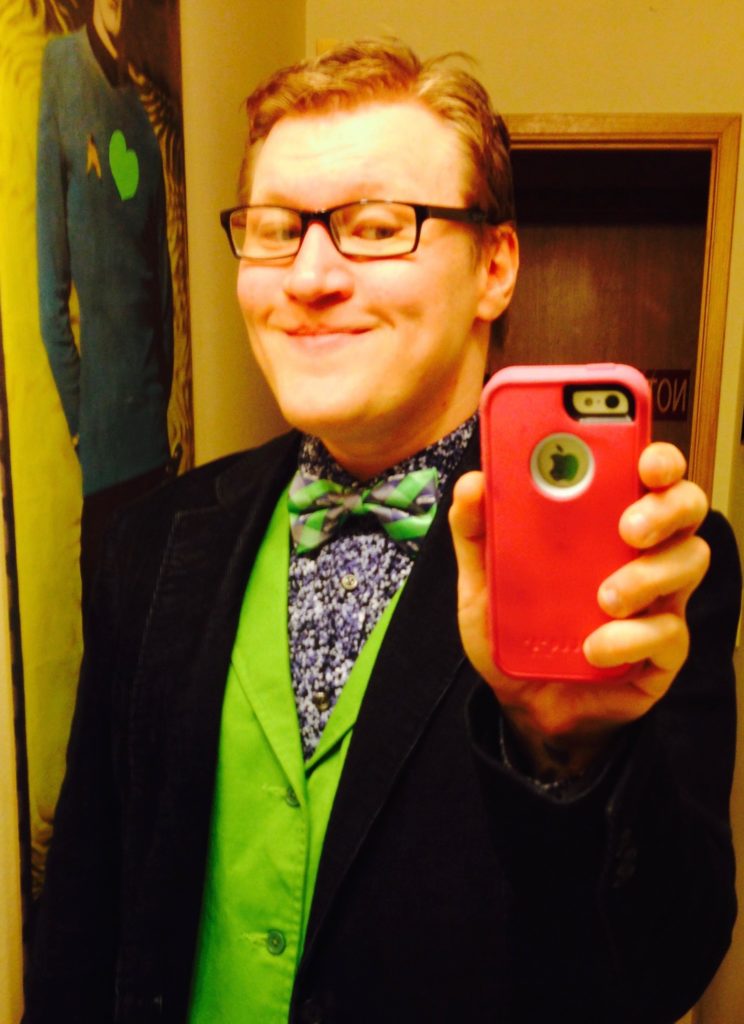
Real-Life Stories: Derek Rich

Real-Life Stories: Derek Rich

Welcome back to our Monthly Real-life stories.  Each month we will feature a new story with someone who has real-life experience themselves or with loved-ones who suffer from depression, cyberbullying, substance abuse or suicide.  Social Media makes the world look amazing which in-turn makes us feel bad when our lives do not measure up.  It is important to understand the difference between the social media world and the real word.  We hope through these experiences, you will see:

  1. You are not alone, many people suffer.
  2. It is ok to not be ok, there is help.
  3. You can overcome it, talk to others for support.

In this months real-life story, Derek immerses us into a vivid telling of life long experiences involving various mental health diagnosis of his own and his family. An artist, now in his late 30’s living with Type-2 Bipolar and multiple anxiety disorders, he is a strong advocate of peer support systems and open communication. He shares his first hand experience of breaking the silence and stigmas surrounding mental health.  Check out Derek’s T-shirt design here.


Mental Health Confessions


Like so many, I’ve been running through, foraging in, and hiding from, the rugged, stormy-yet-sunbeam-flecked wilderness of mental illness for as long as I can remember.  Depression and disorder run deep in my family’s soul and bones, with tentacles coiled around members both old and young.

Something was different in our family tree, hardwired in long before I was born. Starting from a pipe-smoking, “eccentric” paternal great-grandfather, whose shifting personas made him equal parts beloved and estranged. To his son, who’d eventually become our clan’s loving-but-controlling patriarch, the hushed, and eggshell-walking specter.

The addition of subsequent rungs to the generational ladder paved the way for collective brain quirks and afflictions (many of which were still nameless, misdiagnosed or dormant) to slide down the side rails and seep into the next, bright-eyed age group. Of my grandfather’s four baby-boomer children, three of them would go on to experience their own serious psychological challenges. Of those three, two would later be treated for clinical depression. Of those two, one would survive an emotionally harrowing suicide attempt that both devastated family and disrupted the community, leaving ripples of shockwaves for decades to come.

Cue that Darth Vader moment, which so many mentally ill sometimes share: that “one” is revealed to be my father. A childhood of psychic pain and interpersonal voids bloomed into a lifetime of violent mood swings, truncated relationships, and an inability to accept, understand and love himself for who he was. Frequently drawn to personalities exhibiting invigorating counterpoints to his depression, he married my mother — a high-motored, high-energy case of attention deficit hyperactivity disorder — and moved away from the rest of his brood to live happily ever after.

Equally hardwired into our blueprint was, regrettably, a very stoic philosophy when it came to open discussion of interpersonal and emotional situations. As a result, opportunities for true healing and growth were frequently swept under the rug, and family members became perfect strangers. More tragically, the more visible symptoms of difficult situations — be they post-divorce financial woes, career indecisions, substance issues or physical changes due to unseen inner turmoil — were commonly treated as punchlines at holiday tables and other reunions. Potential understandings were paved over with the asphalt of silence, which in turn was lacquered with an impermeable tar of judgments.

By the time it all reached a boiling part in my father’s head and heart, he was an over-the-hill schoolteacher struggling to treat his Bipolar disorder, while trying to help his wife raise two sons. As his moods fluctuated and outbursts became more frequent, his sense of self-worth evaporated, causing a retreat into patterns of quiet — but ultimately dangerous — stoicism. Increasingly withdrawn and all alone in his forest, he ended all treatments (both counseling and pharmaceutical), seemingly severed all ties, climbed into his truck one morning and drove off… and into his most terrifying demons. The suicide letters arrived weeks later, just before my eleventh birthday. Fortunately, the attempt was unsuccessful— though it didn’t necessarily feel that way, as he moved back to his childhood neighborhood to recover under the wings of his parents and brothers.

The true effectiveness of that recovery period proved to be riddled with more question marks, further silence, and disconnection. Details of the suffering leading to my father’s event became conversational no-fly zones. Talking about feelings were an even greater taboo on my paternal side of the equation than ever before. While my mother, brother and I desperately tried (in our own ways) to grieve, comprehend and heal together, there was a tension-multiplying expectation that (a.) everybody kept a tight, almost mafia-esque lid on things, and (b.) complete understandings be somehow reached while consciously choosing to avoid the heart of the matter. We became a family defined by locked doors, suspicion and gag orders, not by vulnerability through imperfection, understanding and unconditional love.

Like broken clockwork, and echoing the ripples of previous generations, those gag orders only magnified the fallout, particularly when it came to my emotional and psychological development. I gradually found teenaged confidants, but Dad’s previous role within the community made being open and speaking from the heart about the core of the situation more difficult. As I entered middle school, puberty, and all their associated perils, I was surrounded by at least three classes of students recently taught by my self-exiled father.  Bullying topics expanded to include regular, juicy reminders that I was indeed “the son of the crazy teacher”. This filled the small spaces in-between the sprawling, uglier ones I constantly fed myself self-admonition while gnawing at my cuticles and bottoming out at school.

The skeletons grew sharper teeth and the taunts felt more tragically true.  I gradually began to exhibit more and more of my father’s qualities. My sleep patterns wobbled, my moods peaked and plummeted, and I became increasingly aggressive towards both myself and my immediate family. I threatened my mother, assaulted my younger brother, and expressed degrees of suicidal intent that varied from attention-seeking cries for help to unsuccessful attempts. I was diagnosed then, in my teens, as being “manic-depressive,” and prescribed lithium and psychotherapy.

My extremely fraught and worried mother continued to be full-throated champion of treatments, but the early damage had been done and, even worse, the cycle of silence had begun yet again. The very best, professional efforts made towards building a more positive foundation of self-understanding and mindfulness were eclipsed. Half the family tree had buried its head in the sand, ultimately refusing to openly discuss both the intricacies and subtleties of the situation for the majority of the next 20-plus years. Without kin readily willing to openly and appropriately discuss the matters, I communicated interpersonally like a grenade. I would hold all my feelings and negative forces inward for as long as possible, before exploding with deafening, toxic effect around my innocent bystander pals. In turn, my earliest ties began to crack under unfair pressures, and so began a long, awful trend where I wrongly treated friendships like therapist-patient relationships with no boundaries and all of the drama.

Life is no fairy tale— and that’s a-okay; it’s not intended to be. Consequently, I can’t lie and pretend that stuff suddenly started making sense, wounds magically stitched themselves up, and entrenched trends reversed course. I can’t deny that the situation became more awful, that many of my relationships deteriorated further. I grew to be even more like my compulsive and reclusive father, or that this fragments of this still remains part of today’s narrative. After a turbulent high school era, I followed in my old man’s footsteps and moved to the place of his birth and residence, hoping to reconcile all relationships and understand the father I hadn’t known. Part of my motivation was to know him more so I could better comprehend who I was. The very best of those intentions were stonewalled and sabotaged, as interpersonal dialogues with established family went nowhere. Normal “twentysomething” stressors (college, relationships and career pursuits, etc.) exacerbated the illness that I then still didn’t fully understand, and I plunged into a decade-plus of dysfunction, isolation and substance abuse.

Re-diagnosed as having Type-2 Bipolar and a handful of associated anxiety disorders (mostly involving issues of separation and acute stress), I nervously sought treatment in my early 20s through counseling with a variety of antidepressants and mood stabilizers. Although progress was being made, I felt like I was still lurching around in the darkness with no end in sight. Talking with professionals could only do so much, especially when struggling to identify with relatives whose spirits and paths strongly resembled those of each other. And still broaching those vital subjects was a bonafide no-no. As the pages of the calendar turned and we all aged rapidly, the elephants in the shrinking rooms only grew larger. Division and misunderstandings continued to flourish, all the while tragedy found new ways to emerge. Elderly family members were diagnosed with terminal illnesses and reached the ends of their stories. The younger group began to evoke worrisome memories of its predecessors. Between myself, my brother and our three cousins, only one hasn’t experienced major, usually public situations involving mental health and some type of chronic, chemical dependence.

This song unfortunately remained the same for me until my early 30s, when I was confronted with two stark realizations. These repetitive cycles were creating new damage that was more toxic than the Ghosts of Childhood Christmas Pasts. And there was no clear route out without first decisively breaking down all the self-imposed dams, finally acknowledging and starting to process all the chemistry and history, and actively searching for new ways of life.

Over time, I had learned that (1.) there wasn’t some band-aid or miracle cure when it comes to psychological or familial issues, (2.) it has to be a lifestyle, mindset and mission, all-in-one, and (3.) honest, healthy communication was the first step. The sea change didn’t happen overnight, but — little by little — new ideas were implemented, and different choices started being made.

I didn’t return to a regimen of anti-depressants, I took a peer’s advice and began seeing a therapist again— focusing heavily on social rhythm therapy as a method of treating my inevitable “Bipolar-flavored” disruptions. Rather than continue screaming at my immediate family’s brick walls, I started reaching out to extended members and friends who’d had similar experiences; and asked them to help me understand and learn. I took critical looks at my habits and crutches and began to make changes. It took time, but elements like alcohol, nicotine, and caffeine were removed and replaced with primordial hobbies of art, writing, reading, and singing.

I became more receptive to regular behavioral interventions by friends and family (intended to actively hold me more accountable for my slip-ups) and tried to remember to not reactively lash out at whatever my loved ones chose to share. Meditation and reflection were installed as daily goals. I strived to strengthen the bond with my then-fiancée and started attempting to apply the virtues of that relationship to weakened bonds with others. I tried to reach out to everyone I’d ever hurt along the way, hoping to communicate that which my dad’s father had apparently never conveyed to him … and what Dad would struggle to explain to me. I said that it was okay to not be okay, explained that I had never been at my best, apologized for floundering and causing anyone else pain, and explained that I only wanted to love, appreciate and listen going forward. It’s that discourse and appropriate openness that is so crucial to all of us finding our grooves, breaking the cycles and charting our own maps out of darkness— and into peace and happiness.

At 37-years-old, I have only a fraction of understanding, and not nearly every answer is readily on-hand. I do know now that genuine solutions and strategies have zero chance of being discovered without some combination of humility, honesty, love and open communication. To borrow and phrase it in the spirit of Mary Schmich’s 1997 commencement speech, I’d simply say “Communicate. If I could offer you only one tip for the future, communication would be it. The long-term benefits of communication have been proven by scientists.” They absolutely have.

None of our roads are ever easy or identical, which is why it absolutely paramount we serve as both our own — and each other’s — loving mirrors, cultivate healthy relationships whenever possible, help light the way, and lift each other up during our respective battles. I have zero ideas of what might be lurking around life’s corner, but I know there are others who have already gone through it, a concept having undeniably lasting, positive power. When we strive to fully communicate our fears, hopes, struggles, and successes, we start to de-fang the beast. We collectively disprove the idea silence and isolation are viable avenues to optimal mental health and— more importantly— destigmatize the notion we are all alone, with no one else able to understand where we are coming from.

-Derek