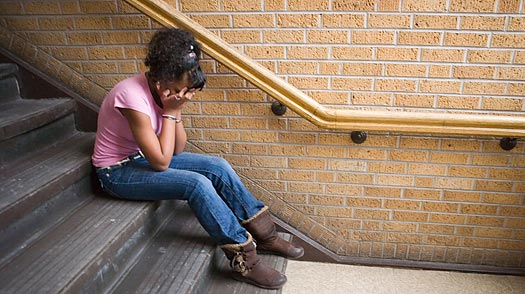
10 Signs that Your Child is Suffering from Anxiety
Parent’s know that all children have anxious moments, and that a certain degree of anxiety is a normal reaction to stress and is even healthy. The most recent and very concerning statistics released by the National Institute of Mental Health, verify that 1 in 8 children is affected by an anxiety disorder. Untreated, this disorder affects the quality of children’s lives, well into adulthood.
What is an Anxiety Disorder in Children?
The Anxiety and Depression Association of America defines generalized, childhood depression as: when a child has ongoing symptomatic behavior that interferes with the quality of their family life, interactions at school, in friendship building, and when resting, which lasts six months or significantly longer. There are many indicators which signal that a child is struggling to adjust to an active life, but a key gauge that cannot be ignored, is excessive worry and constant concern that something bad is going to happen. Anxious children often tend to be concerned about present, future, and even events and conversations from the past, which have impacted people’s lives, even on a global scale. Many children worry about natural disasters, being late for school, engaging in anything where they cannot achieve perfection. Any new situation, challenge, or stress-building competition will trigger a display of reticence, reluctance, hostility, and an unwillingness to engage, perform, focus, or participate in whatever the event might be. The most decisive behavior exhibited by an extremely anxious child, is the inability to control these feelings, even with parental loving and patient support. The worry builds until the quality of life for the child is extremely diminished.
What is Healthy Worry … What is Anxiety?
It is natural for children to worry. Often their lives are filled with situations which demand a high level of performance. Children have very real stresses, depending on their age, and which stage of development they are experiencing. Disappointments often occur which can be very frustrating. They worry about: building and maintaining friendships, being bullied, being picked for a team at gym, achieving good grades, and much more.
Discerning the difference between healthy cautiousness, and problematic worrying, which effects a child’s ability to socialize, compete in game-like events, function in learning environments, and to happily and confidently interact with family and peers, for several weeks or longer, is a definite behavioral “red flag”. Prominent worry is an indicator that closer scrutiny, and even medical expertise, is needed, to restore a healthy childhood mentality.
Anxious children hide their feelings of fear and disquiet when they are out in real-world social situations. Fitting in and sustained belonging, are essential to them, and they push-back negative feelings, internalizing uneasiness and worry. At home, safety and security are restored, of course, and all the constrained and repressed feelings they suppressed, are often released as full-blown meltdowns of unprovoked anger. Tantrums are not just for little toddlers; older children have them too, when they are in a constant struggle to regulate their overwhelming emotions.
When are Meltdowns and Tantrums Problematic?
Children develop emotional regulations as a normal part of the maturation process. When tantrums occur, the child has some control of their behavior, but acts out to relieve frustrating feelings. A meltdown is defined as an angry outburst, during which a child has no control of their behavior. Meltdowns require that parental interaction is necessary to restore calm.
Anxiety blocks a child’s ability to think logically. Intense levels of fear precipitate out-of-control, tantrum behavior, as if their already worried emotions, were being fueled by steroids, achieving an even higher degree of irritability and intensity. Parents need to discern whether the tantrums, meltdowns, and excessive fears and worries are, in fact, problematic, and if so: is there an undiagnosed anxiety disorder issue which must be addressed. Medical professionals often suggest that parent’s tract their children’s’ meltdowns, to discover revealing patterns of triggers for these highly emotional episodes.
Signs and Symptoms of Anxiety in Children
When children are suffering from an anxiety disorder, they may often specific exhibit physical symptoms:
- Avoidance of school, social situations or interacting with peers and others
- Diminished academic performance and plummeting grades
- Extreme shyness
- Persistent lingering distress, even with parental and or other adult’s reassurances
- Troubled sleep patterns and nightmares causing constant lethargy and exhaustion
- Physical symptoms, such as headaches, stomach cramping, muscle tension and difficult breathing patterns
- Inattention, poor focus and difficulty following directions
- High levels of spontaneous irritability, agitation, exhibition of anger
- Restlessness, nervousness and frequent crying
- Avoidance of being alone within a room at home, if parent is not near by
It is possible for a child, adolescent, or teen to have an anxiety disorder, without being symptomatic. Keeping an open dialog with children about their challenges, problems and emotions, often keeps worrisome issues in a solvable, temporary, perspective, where reasonable “fix-it” or “coping” solutions can be mutually conceived.
Teaching Kids to Fight Their Fears
There are many ways that parents can help to teach their children to work through their fears, even at an early age. What parents must do, is turn negative thinking into a positive mindset, which counteracts their fear and replaces it with courage and confidence. A child’s fear is very real and overwhelming for them. When a loving adult affirms the child’s fear, without criticism or judgement, and demonstrates verbal support, with a calm demeanor, in planning how to overcome the feelings; the child will learn to access the situation, and the fear will diminish.
Adolescents and teens have a myriad of issues and stresses which may make them fearful. As they become more immersed in the face-paced, every-evolving world, and are exposed to the global, digital, informational, interactive, and mysterious internet; it is easy to reach a point of mental overload and meltdown. If parents, extended family, teachers and others exemplify self-confidence, and assuredness, when addressing violence in schools, bullying, fake news, global warming, and other topics/stressors; children too, will be more prone to see school obstacles, social situations, and environmental issues as a part of life that can be resolved, and not feared.
Untreated Anxiety Disorder ~ When to Seek Professional Help
A majority of the children who suffer from anxiety disorders, overtime, do outgrow them, if their environment is positive, supportive, loving and nurturing. However, anxiety can recur in later teens and adult life. Coping with anxiousness leads to avoidance of stress situations, lower achievement levels in school, deepening depression, and too often, self-medicating and substance abuse.
Marian Margulies, PhD, a psychologist in New York City, has wholly endorsed “Talk Therapy” as one of the best treatments for anxiety disorders because it works very well, has long lasting positive results, and identifies the cause, not just the symptoms. Therapists are able to accurately diagnose the problems and create specific coping skills which dispel worry and fear. Talk therapy (cognitive-behavior therapy) helps children work through the feelings which they have been suppressing, and learn to manage the fear they feel, with tools that work specifically for them. Any anger that anxiety has produced, is soon dissipated, and their ability to face future frustration and stress is strengthened.
Children need help from a professional who understands not only anxiety
disorder, but also children, and how they think and feel. Most parents wait too long to seek help. Please don’t wait if your child:
- Is struggling to learn and cannot focus with intent
- Is impeded by constant symptoms of physical illness due to anxiousness
- Is unable to make friends and socialize due to being constantly fearful
- Is adding to the stress of the family dynamic because they don’t want to do anything
- Is not eating properly, or having any energy to function
Children suffer quietly. Having someone to talk to who not only understands their feelings, but can help them to change how they feel, is a tremendous relief for them. Finding out that many people have these problems, and that they can be treated successfully, is, in itself, a life affirming gift for a child.
The reality that many children who suffer from anxiety, mask their fears and “present well” in front of family and friends, is very concerning for parents. It is possible to take proactive steps, when a child is spending online time, to monitor their posting and messaging content, in order to discern if a problem exists. The Fipple app can be your most effective tool, to quietly discern if a problem exists, through monitoring mobile devices, iPads and more, for “key” indicators that digitally parent, in moments when you are not present. Giving you the precious knowledge you need to provide the best care for your loved ones, is the mission we strive to achieve. Visit fipple.com and be the proactive parent that this cyber generation requires.